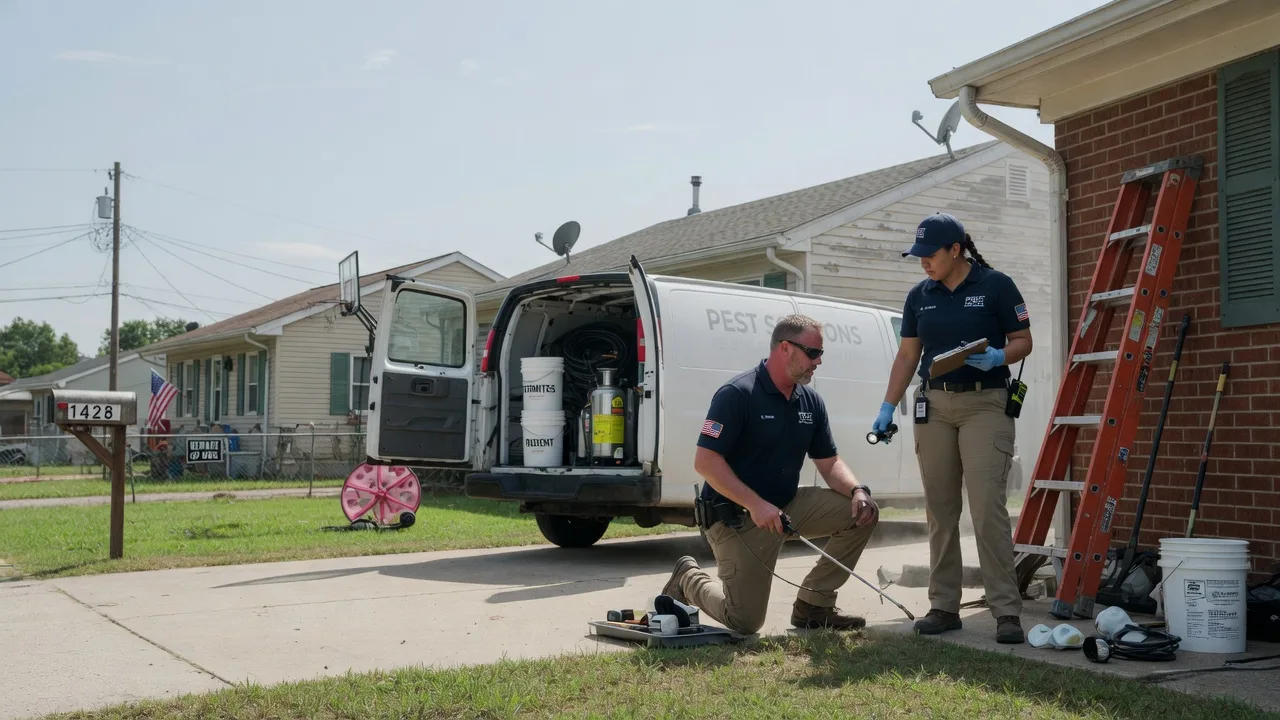
European wasps are a real problem across the Yarra Valley in late summer and autumn. Nests start small in spring and grow through the warm months, and by February or March a single nest can hold thousands of wasps. They are drawn to meat, sweet drinks and fallen fruit, which makes barbecues, orchards and outdoor dining areas hard work.
Nests are often hard to spot. Most are underground in lawns, garden beds and embankments, with a small hole at the surface. Others sit inside wall cavities, roof spaces, retaining walls or old sleepers. If you see a steady stream of wasps flying in and out of one place, there is almost certainly a nest there.
- Locating the nest by watching the flight path
- Treating the nest entrance with a dust or foam made for wasps
- Nests in walls and roof spaces treated from the entry point
- Advice on keeping the area clear while the nest dies off
- Tips on bins, fallen fruit and pet food outside
When you call, tell us where the wasps are going and whether children or animals use that part of the yard. We give you upfront pricing on the phone and book a nearby independent crew. Keep people and pets well away from the nest until the crew arrives, and do not block or pour anything into the hole. If someone is stung, call 000 or ask a doctor or the Poisons Information Centre on 13 11 26.
Wasp activity usually settles within a day or so after treatment. Checking the yard for new nests in early summer helps catch them while they are still small. For wasp nest removal anywhere in the Yarra Valley, call 03 7053 9852 to book.